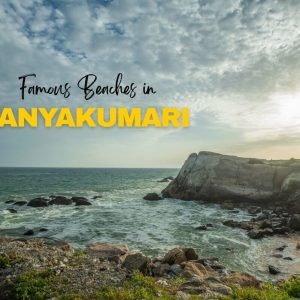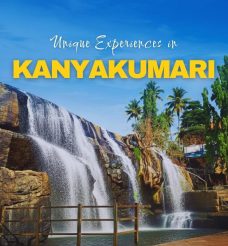
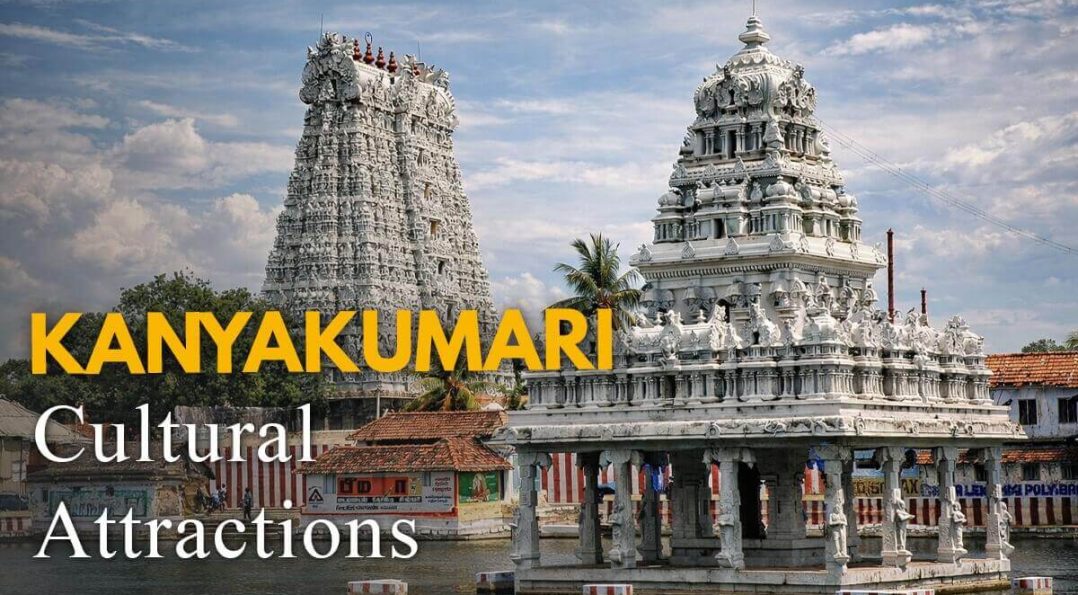
There’s no doubt that visiting Kanyakumari is all about exploring its beaches and temples, but the city has so much to offer that a one or two-day visit doesn’t do justice. Of course, you can always book an ocean view resort rooms in Kanyakumari to lounge around and enjoy the magnificent sunrises and sunsets. But if you are interested in knowing what makes our region culturally unique, you must explore these experiences.
Temple Visits:
With over a million temples, Tamil Nadu is rightly called The Land of Temples. Some of these are hundreds and even thousands of years old. However, unlike in other regions where you will predominantly find temples with huge Gopurams (ornately decorated gateway towers at different entrances), Kanyakumari has a blend of traditional Dravidian-style and the regional Kerala-style temples.
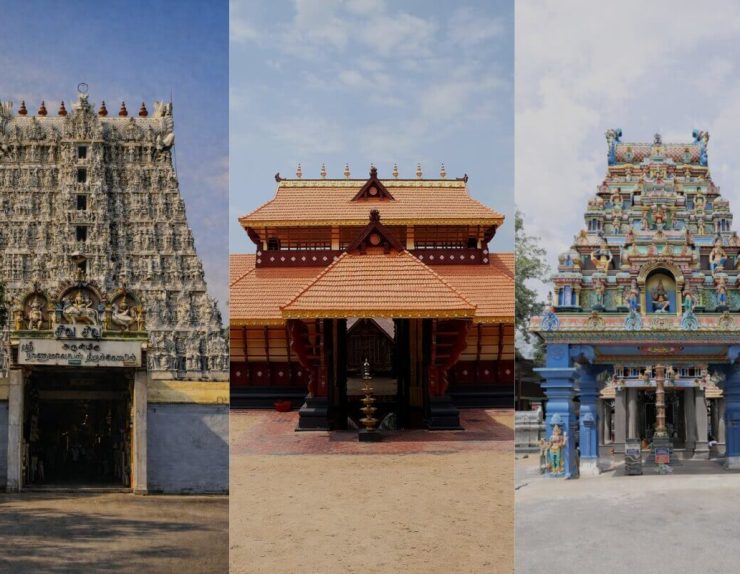
The most famous of all is the Kanyakumari Bhagavathiamman Temple, dedicated to Kanyakumari, the deity who gives the town and district their names. Legend has it that Lord Parashurama consecrated the temple – in fact, it was the first of the 108 Devi temples he established to atone for the sin of killing his mother (Matrushrapa). The temple is dedicated to Mahamaya, who is the goddess of penance, purity, and virginity. It is for this reason that people have, for centuries, chosen Kanyakumari to take Sanyas or renunciation from worldly attachments.
Another famous temple in Kanyakumari is the Suchindrum Sthanumalayan Temple, a temple dedicated to the trinity of Brahma, Vishnu, and Shiva. The deity here is called Sthanumalayan – Sthanu meaning Shiva, Mal meaning Vishnu, and Ayan meaning Brahma. It is believed that Lord Indra was relieved of his curse in this place, hence the name Suchindram, meaning the place where Indra was purified. The temple is also known for its 22-foot-long Hanuman idol, which dates to the 8th-9th centuries, but was later buried for several centuries (to protect it from invaders), until it was rediscovered and reconsecrated in 1930.
The Adi Keshava Perumal Temple in Thiruvattar is dedicated to Lord Vishnu in the form of Ananthapadmanabhaswamy, i.e., Lord Vishnu lying on his serpent Adi Shesha. The deity here is believed to have been consecrated by Lord Parashuram and was associated with the Travancore royal family for a long time, until the family shifted base to Thiruvananthapuram. The deity here is made of a concoction of jaggery, mustard, and lime paste and can be viewed through three doors. Another feature of the temple is its intricate paintings and ornate sculptures.
Kanyakumari is also known for its Bhagavathi worship, the primal divine feminine energy, worshipped as Parvathi, Lakshmi, Kali, etc. The most famous of all is the Mandaikadu Bhagavathi Amman Temple, which is also called the Women’s Sabarimala, referring to the Irumudi that women carry to the temple.
The Kollemcode Sree Bhadrakali Amman Temple is another temple dedicated to Kali, a fierce form of Bhagavathi. She is worshipped in two forms, Bhadra and Rudra, who are considered sisters. The highlight of the temple is the Kollemcode Thookam, where children are carried by a Thookukaran in a chariot to a height as a way of thanking the Devi for blessing them with an offspring.
The city of Nagercoil in Kanyakumari is named after the Nagaraja Temple, dedicated to Nagaraja, the serpent king. People visit the temple seeking relief from various Naga Doshas, including Sarpa Dosha and Rahu-Ketu Dosha. Worshipping the deity here is known to help with problems related to skin diseases, progeny, and delayed marriage.
You can visit all these temples and even learn about their history, architecture, and worship practices when staying at the Amaari Ocean View Resort in Kanyakumari.
FAQs:
1. What is the dress code for temples in Kanyakumari?
Women must dress modestly, avoiding dresses below the knee or clothes that reveal the arms. Men must not wear upper garments in most temples.
2. Can you arrange for special pujas in temples?
You must check with the temple authorities to arrange for special pujas in temples.
3. Are these temples open throughout the day?
No, most temples open at around 4:30 am and are open until 12:30 in the afternoon. They reopen at 4:00 pm and are open until 8:00 pm or 8:30 pm in the evening. We suggest you check online for timings of individual temples.
Learning About the Handicrafts:
Tamil Nadu is home to an impressive spectrum of age-old handicrafts that are unique and reflect the state’s rich cultural heritage. For instance, terracotta figurines of horses aren’t merely a popular home adornment; they’re part of Tamil Nadu’s folklore and found in all Ayyanar temples, guarding its villages. Similarly, Chettinad homes are incomplete without the handmade Athangudi tiles, made from local materials and coveted by interior designers the world over.
Kanyakumari is no stranger to unique handicrafts – while some are timeless traditions, others are rooted in India’s modern colonial history. Some of the region’s unique handicrafts that you can explore during your stay at our Kanyakumari beach resort include:
Temple Jewellery Making, Vadasery:
Temple jewellery is an age-old craft practised in Vadasery, once a tiny village on the outskirts of Nagercoil, since the 9th century. It is believed that the Chola kings and later rulers of Ramnad purchased ornate gold jewellery for deities in their temples from Vadasery. These gold ornaments were adorned by temple dancers and later by brides for weddings, becoming heirlooms passed down through generations.
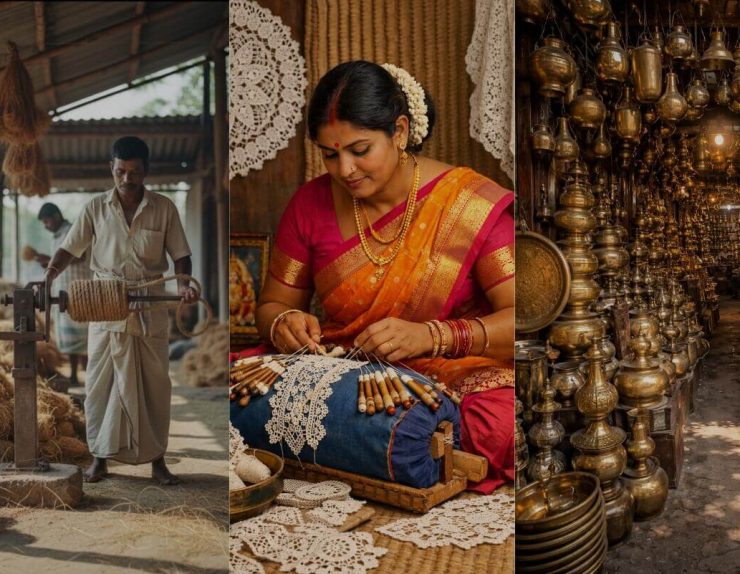
These pieces are intricately designed with traditional motifs like Gopurams, lotuses, and mythical creatures like Yazhi, Makaras, Gandharvas, Garudas, and Nagas. While the jewels were originally made from solid gold and set with precious stones, over the years, craftsmen began to use silver tape overlaid with gold leaf or dippings. They replaced precious stones with colourful glass imitations.
Some of the traditional temple jewellery include elaborate neckpieces called Addigai, forehead ornaments like Jada Naagam, Maanga Malai, Nethi Chutti, Surya Pirai and Chandra Pirai, Kaasu Malai, Vanki, Oddiyanam, and Jhimikki.
Today, the art is practised by a few remaining Vishwakarma families in Vadasery, who pass it down to their offspring. While there is no formal tour, you can visit workshops where the craft is practised and learn more about temple jewellery-making from the craftsmen themselves. Let us know if you’d like to explore Vadasery and the Vishwakarma workshop hamlets when booking your ocean view resort in Kanyakumari, and we can arrange one for you.
Palm Products:
Palm trees have always been an integral part of Tamil culture and are even recognised as the state tree of Tamil Nadu. No part of this tree goes to waste, while the leaves are dried and used as fuel or to make decorative fans, boxes, and other items, the fruit is tasty and used to make Nungu Sarbath, a juice. Palm sap is made into palm jaggery (Karupatti) or tapped to extract Neera (palm nectar).
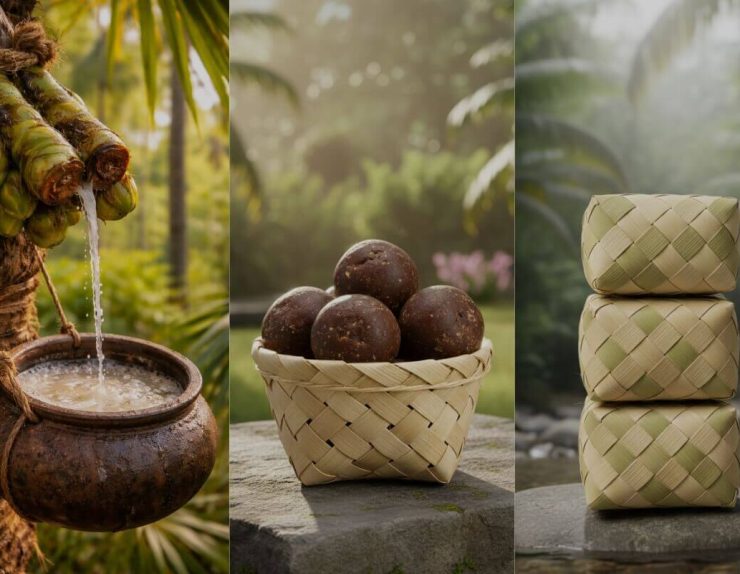
While it is difficult to follow palm tappers, you can visit cottage industries that specialise in palm products. You can see firsthand how craftsmen shape various items like hats, palm leaf boxes, bags, and baskets, and even learn a skill or two from them. Let us know beforehand if you’d like to meet palm leaf artisans when booking your ocean view resort in Kanyakumari.
Coir Industry:
If India is the largest producer of coir products, Kanyakumari is one of its biggest contributors. Blessed with a large coastline, the region is home to several coir industries that use backwaters for coir retting, a process in which the fibres are loosened and woven into yarns. While no formal tours are available, you can visit these coir manufacturing units to learn how coir is woven and fashioned into different products, including ropes, baskets, mats, coir pith, and other decorative items.
The best place to explore coir manufacturing units in Kanyakumari is Ethamozhy, a village 10 km from Nagercoil. The place is also famous for its coconuts – this variety is known for its high yield and has even earned the GI tag. At Amaari, we can even arrange a visit to help you explore these coir industries and learn more about the Ethamozhy coconut. Call us at +91 8825 4663 15 to book premium ocean view rooms at one of the best resorts in Kanyakumari.
Lace Making:
Lace-making was introduced to Kanyakumari by Belgian and English missionaries seeking to empower young, lower-caste women and supplement their families’ incomes. At one time, these laces were exported to Germany, Rome, and other parts of the world. Over the years, the missionary nuns encouraged the women to develop their own designs and patterns, which were distinct from traditional English patterns and helped establish Nagercoil lace as a unique indigenous style.
Even today, thousands of women are engaged in lace-making and embroidery, particularly in villages like Mulagumoodu, Neyyoor, Karungal, Marthandam, and Parasalai. In fact, there are established mission centres that undertake orders and distribute them among members. Some of the women have even inherited the skills from their mothers and grandmothers along with their bobbins, pins, and crochet hooks.
If you’d like to visit these lace-making cottage industries or explore their industry, let us know in advance when booking a room at our Kanyakumari beach resort. We’ll be happy to arrange a tour for you!
Sculpture Making, Mylaudy:
Besides Mahabalipuram, there’s one lesser known place famous for its stone carving. The tiny village of Mylaudy has been home to sculptors for over 700 years. They enjoyed the patronage of the Travancore rulers, and their sculptures decorated the temples of Suchindrum and Kanyakumari. The Krisnasila art is used in temple architecture and has adorned temples across the world, and is used to carve famous statues like the Thiruvalluvar statue in Kanyakumari and the Kattabomman statue in Kayatharu.
A visit to these workshops can help you understand this age-old craft. You can learn about the male and female rocks, the differences and uses of each of these rocks, and the musical notes that can be created from gender neutral stones. It’s a delight to listen to these craftsmen explain their art in detail. For instance, did you know that only female rocks are used to make female idols and male rocks are used to make male idols? Even the eye-opening ceremony (of the idol) is interesting to listen to and experience. If you’d like to visit these workshops, let us know in advance when booking rooms at our Kanyakumari beach resort.
Brass Market, Kottar:
Kottar is an ancient market town mentioned as early as the Sangam era and by early travellers such as Ptolemy and the Periplus. In ancient times, commodities such as sandalwood, teak, gold, ivory, and pepper were traded alongside paddy and flowers that grew abundantly around Kottar. They even had an exclusive donkey market where donkeys were traded – even today, there’s a dedicated Kalutha Santhai in Kottar.
Another famous market within Kottar is Kambolam, where you will find dozens of shops selling brass utensils and other metals. It is a great experience to visit this market to admire or shop for brass and bronze utensils, including lamps, pots, pans, and even cutlery.
A Word About Amaari Ocean View Resort in Kanyakumari ….
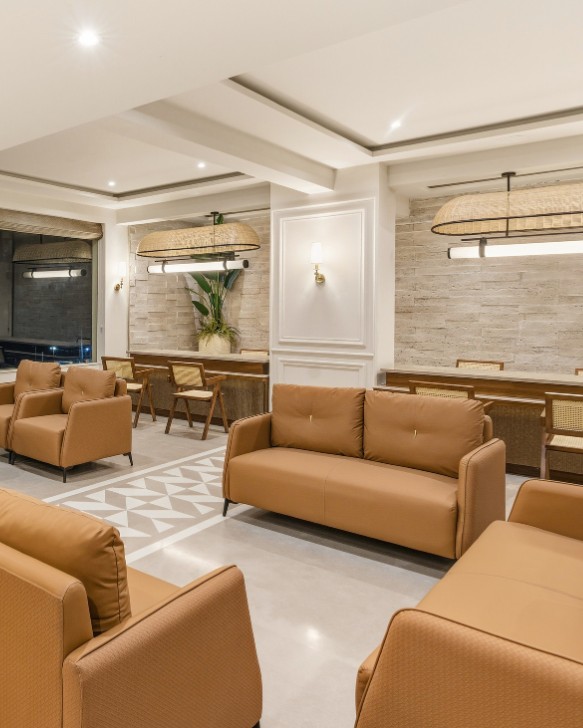
Amaari is a premium ocean view resort in Kanyakumari offering elegant rooms with panoramic sea vistas, allowing guests to enjoy sunrise and sunset over the Indian Ocean. It is a perfect venue for destination weddings and other intimate get-togethers. Stay connected and explore real-time updates, guest stories, and stunning coastal views by following Amaari on Instagram.